
Incomplete Mitigation
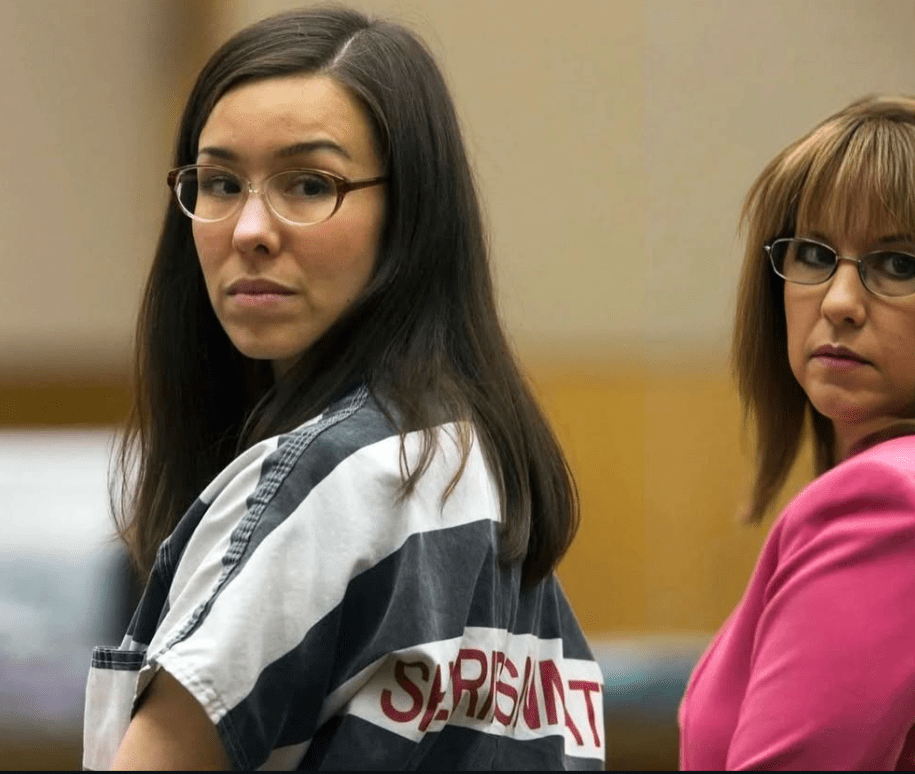
In a capital case, the defense team must make every effort to prevent an outcome as extreme and severe as the death penalty. Part of this effort entails a “scorched earth” approach to mitigation, meaning every aspect of their client’s life is examined. Childhood friends, school teachers, and extended family members are tracked down and interviewed whenever possible, even if the client was not close to these people.
The benefit of interviewing family members who are not close to the client is that they can still offer insights into the specific dynamics, history, and dysfunction that occur in families, which could have impacted the client’s life and decisions. The mitigation investigation can also lead to the discovery of witnesses and additional evidence.
In light of the State’s bloodlust for Jodi and its relentless pursuit of her death in a retrial, mitigation specialist Maria De La Rosa and attorney Jennifer Willmott advocated for more investigation of mitigation: Jodi’s early childhood, her best friends, and the other half of her family that none of her legal team members had spoken to up to that point. They pressed first-chair lawyer Kirk Nurmi to allow them to pursue these unexplored areas, but he refused, insisting there was nothing more to find out.
Maria and Jennifer were determined to save Jodi’s life. They saw value in her existence, and, unlike Nurmi, their ethical obligations were strongly entrenched. More importantly, they knew the death penalty was never appropriate in this case: a woman forced to fight to the death against her abusive attacker.
Nurmi’s ethical duty to his client was required by his license but was not well-cultivated. Why would any lawyer try to prevent additional mitigation when his client is facing a heightened possibility of execution?
As for Maria and Jennifer, their consciences led them in the right direction. In a gutsy boss move, these women went against Nurmi’s directive not to pursue mitigation. The following are some of the mitigating factors that they uncovered in 2014 — after Jodi’s first trial in 2013, and after bucking Nurmi’s nonsensical and unethical directive to leave mitigation alone.
1. Jodi’s mother’s substance abuse while she was pregnant with Jodi
2. Jodi’s dad’s substance abuse when she was a young child
3. childhood friends who witnessed the violence against Jodi and her brother by their parents
4. a friend of Travis’s who could verify the type of gun Travis owned, who witnessed Travis in the midst of a violent outburst against a former girlfriend, and who knew of Travis’s habitual attraction to illegal content involving minors.
None of the above factors would have come to light had Maria and Jennifer blindly followed Nurmi’s unconscionable prohibition against further investigation.
These are profound discoveries that could have:
1. added weight to Jodi’s testimony and the credibility thereof (she is not the only one who knew about Travis’s disturbing predilections).
2. offered the first jury a fuller picture of Travis’s violent nature (another ex-girlfriend whom he abused).
3. discredited the State’s preposterous theory that she somehow stole her grandfather’s gun in the city of Yreka while she was out of town at a Buddhist temple (Travis had a gun).
The true reason Jodi’s lead attorney sought to prevent the other team members from pursuing avenues that could help her will probably remain hidden behind a veil of his excuses. But thanks to their strong ethics and the seriousness with which they treated their work, Jennifer and Maria uncovered corroborative and exculpatory evidence and mitigation. It’s too bad their leader didn’t allow them to find these things before Jodi’s wrongful conviction.
_____________________________________________
In Arizona, Justice is Slow or Absent Entirely
Ten years ago, Jodi Arias was sentenced to natural life in prison (known in most states as life without parole, or LWOP). After she was wrongly convicted of first-degree murder in an overly publicized trial with an unsequestered jury who voted 4-8 against the death penalty, the state of Arizona failed to understand that its sentiments about killing Jodi were not unanimously shared.
Now-disbarred prosecutor Juan Martinez and his elected boss Bill Montgomery wasted the public’s time, money, and resources when they tried again to kill Jodi in a second trial. Arizona’s repulsive and arcane “laws” permit these multiple murder attempts of a citizen.
In spite of the state’s second attempt, one juror held out and voted to spare Jodi’s life. This juror’s bravery stunned the public and people clamored to know the reason for her decision.
Her family’s statements to the media gave clarity. This juror had been in an abusive relationship, which she disclosed prior to being empaneled, and she recognized abuse when she saw it. When she was presented with evidence of how Travis abused Jodi, this juror knew the death penalty was unwarranted, and she voted for Jodi to live.
Now, the judge had to decide whether to sentence Jodi to natural life, or life with the possibility of release after 25 years. The judge had already betrayed her bias against Jodi by refusing to sequester both juries in what remains the most publicized case in Arizona’s history, publicity which the judge herself enabled by allowing the media to transform her courtroom into a studio set wired with their cameras and microphones, and allowing the media to livestream every moment.
The judge also betrayed her bias during the trial through her many rulings against Jodi in favor of the judge’s former colleague, Juan Martinez (the now-disbarred prosecutor).
Prior to sentencing, Jodi and her lawyers were prepared. In light of her obvious bias, Judge Sherry Stephens would likely impose the harshest sentence she legally could: natural life.
Today, Jodi fights her wrongful conviction with your help. You can support her fight for freedom at Justice4Jodi.com.
As a lifelong artist, she has continued making art at Perryville, the women’s prison in Arizona. Her art is available at JodiArias.com.
Her case is now in the PCR (post-conviction relief) stage of getting her conviction overturned. This is a long, detailed, arduous process, so let’s stay by Jodi’s side and see her all the way through to her long-overdue freedom!
_____________________________________________
Donations to the Fund Are Not Wasted! Here’s Why
Recently, someone asked if it was not a waste to donate to the JAA Appellate Fund since Jodi’s appeal to overturn her wrongful conviction was denied in 2021 by the Court of Appeals of Arizona. Given how complex the legal system is, this was a good question that others may have also wondered. The short answer is, no, it’s not a waste. Here is an explanation:
Jodi was appointed public defenders in 2015 to file her direct appeal with the Court of Appeals of Arizona. That court upheld her wrongful conviction in 2021 despite acknowledging gross prosecutorial misconduct by now-disbarred Juan Martinez.
Jodi was then appointed lawyers who are now in the process of filing for post-conviction relief (PCR). They have yet to file this brief because the case file is enormous and they are still preparing. This brief will be filed with the Superior Court of Maricopa County. After this, her court-appointed representation will end, which means she will have to pay for a lawyer beyond this point.
So what is beyond this point? Well, if Jodi is granted relief from the PCR process (meaning the judge agrees that Jodi did not receive a fair trial), the clock restarts in her case, and the fund will be used to get a good pretrial lawyer. This is written into the instructions of the trust.
If she is not granted relief (meaning the court upholds her wrongful conviction), the fund will be used to retain a lawyer to petition the federal court circuits all the way to the U. S. Supreme Court, if necessary.
Because Arizona is loath to admit just how badly Jodi’s case has been handled, it will likely take a higher court to hold Arizona’s lower courts accountable.
Yet now that the trial judge, Sherri Stephens, has retired, a different superior court judge may recognize the utter circus that was Jodi’s trial and throw out Jodi’s wrongful conviction. This is certainly a legal possibility.
In either of the above scenarios (relief or no relief), the JAA Appellate Fund will be greatly needed:
- To retain a lawyer to continue petitioning federal courts on Jodi’s behalf.
- To retain a lawyer to represent her in the pretrial process. Technically, she could be appointed another public defender under this scenario, but given how terribly that worked out the first time, retaining a private lawyer would be the better way to go. The JAA Appellate Fund allows for this scenario.
Lawyers are expensive, and you often get what you pay for, so let’s empower Jodi to afford the best legal representation possible. Please click or tap the button below to donate now.

All donations made via this website go directly to the JAA APPELLATE FUND, for assisting with the legal fees associated with appealing Jodi’s wrongful conviction. All donations are confidential. This is the ONLY website authorized to collect donations.
 justice4jodi.com